Friday, December 06, 2019

From the Dick Buchanan Files: Bill Mauldin's World War Three Cartoons

I'm handing things over to Dick Buchanan who reminds us about this fascinating "What If" story about a possible World War Three from a 1951 issue of Collier's Magazine. We were in the beginning of the cold war, and there was always the threat that the cold war would go HOT. This is that imagined scenario, just six years after the end of World War 2. Thank you and take it away, Dick:

----

BILL MAULDIN’S WORLD WAR THREE CARTOONS
  
        (Collier’s  October 27, 1951)


By October, 1951 World War Two was in the rearview mirror, the Korean Conflict was underway and the idea that World War Three was on the horizon was a commonly held fear.  With that in mind, the editors of Collier’s put together a special issue "Preview of the War We Do Not Want – an Imaginary Account of Russia’s Defeat and Occupation, 1952-1960."  The project, code-named "Operation Eggnog," was put together by Associate Editor Cornelius Ryan under considerable secrecy over a period of nine months. The 131-page issue appeared October 27, 1951.

Here’s the story in a nutshell. In May, 1952, after the Russian invasion of Yugoslavia, the principal United Nations countries and the United States declare war.  The United States uses atomic bombs against Russian industrial complexes.  Soviet forces invade West Germany, the Middle East and Alaska.  US forces, in disarray, have retreated on all fronts.  Korea and Japan are evacuated. London is hit by nuclear weapons, followed by Detroit, New York and Hanford. It should be noted their assessment of the harm caused by nuclear weapons was seriously deficient. Yes, things were grim, but never fear, all is not lost.

The following year more American cities are struck by nuclear weapons, but now better prepared, there are fewer casualties. Slowly but surely, UN forces manage to contain invading Soviet forces in several theaters. On May 22nd, B-36s drop nuclear weapons on Moscow, retaliating on Russia’s nuclear attack on Washington, DC.  UN forces are victorious in conflicts highlighted by a suicide task force of 10,000 US paratroopers dropped into the Ural Mountains to destroy the last remaining hidden Soviet nuclear stockpiles. The War ends in 1955 with the occupation of UN forces in Soviet Union.  In true storybook fashion Good prevails.  A Christian Science Monitor editor reports the rebirth of religion, unions, a free press and democracy in Russia.

These imaginary events of the Third World War were the covered by 20 leading writers of the day. Author Robert E. Sherwood provided the chilling narrative, Edward R. Murrow, as an embedded journalist, described the nuclear bombing of Moscow and Philip Wylie helped wind things up with a love story about a US Major who falls in love with a Russian girl who has been rendered infertile by radiation.  Other distinguished contributors included Senator Margaret Chase Smith, labor leader Walter Reuther, sports columnist Red Smith and world traveler and author Lowell Thomas. Leaving no stone unturned, Collier’s commissioned famed cartoonist Bill Mauldin to provide all of the cartoons in the issue.

Bill Mauldin was the preeminent cartoonist of World War Two. As an 18-year-old training with the 45th Infantry he cartooned part-time for the camp newspaper, The 45th Division News, in 1940.  These cartoons depicted the viewpoint of the war from the infantryman’s perspective, as experienced by bedraggled soldiers, Willie and Joe, the unshaven, listless, dull-eyed, cynical dogfaces who spent the war fighting the Germans, trying to keep dry and warm and flirting with insubordination. In 1943 his cartoons began appearing in Stars and Stripes and were syndicated by United Features in 1944.

Although Mauldin’s cartoons were wildly popular with enlisted men and with American audiences as well, they were not well received by some officers, notably General George Patton.  Patton summoned Mauldin to a meeting in 1945 and complained about the scruffiness of the characters and blamed Mauldin for disrespecting the army and "trying to incite a mutiny." Subsequently, General Eisenhower put an quick end to the campaign to ban Mauldin’s work by when he wrote an official letter to Deputy Theater Commander Lt. Gen. Ben Lear that said, in part, “A great deal of pressure has been brought on me in the past to abolish such things as Mauldin’s cartoons. . . . You will make sure that the responsible officer knows he is not to interfere in matters of this kind. If he believes that any specific violation of good sense or good judgment has occurred, he may bring it to my personal attention.”
 
  Here are all the cartoons Bill Mauldin created for Collier’s incredible project.


1.  BILL MAULDIN.  Collier’s  October 27, 1951.  Page 48.


2.  BILL MAULDIN.  Collier’s  October 27, 1951.  Page 59.


3.  BILL MAULDIN.  Collier’s  October 27, 1951.  Page 69.


4.  BILL MAULDIN.  Collier’s  October 27, 1951.  Page 74.


5.  BILL MAULDIN.  Collier’s  October 27, 1951.  Page 96.


6.  BILL MAULDIN.  Collier’s  October 27, 1951.  Page 106.


7.  BILL MAULDIN.  Collier’s  October 27, 1951.  Page 112.


8.  BILL MAULDIN.  Collier’s  October 27, 1951.  Page 125.


9.  BILL MAULDIN.  Collier’s  October 27, 1951.  Page 128.


Thursday, December 05, 2019

Wednesday, December 04, 2019

Swann: Charles Addams Original Cartoon Up for Auction


The original art for this Charles Addams cartoon, which first appeared in The New Yorker in 1973, is up for auction at Swann. It's estimated to go for $12,000 - $18,000. The piece, like most of Addams' originals, is rather large, at 20 x 13 1/2 inches

Sheila Gibson Stoodley, author of The Hot Bid, talks with Swann Illustration Art Director, Christine von der Linn in this excerpt from their blog page:

How did this Addams Poe cartoon come about? I understand the joke was not Charles Addams’s idea—someone else came up with it, and he was asked to illustrate it?

Nevermore was, in fact, the first idea that cartoonist Jack Ziegler sold to The New Yorker. At that time, The New Yorker had mostly phased out the editorial practice of having staff cartoonists illustrate caption and concept submissions by other contributors, but it still occurred sometimes. Cartoon editor James Geraghty brilliantly tasked Addams with this one. It was only later that year, when Lee Lorenz joined The New Yorker and invited Ziegler to contribute his own work, that he became a regular cartoonist.

The Swann illustration art auction closes on December 10. 

A big thanks for D.D. Degg for the heads up!

Tuesday, December 03, 2019

Vintage Pen and Pencil Vending Machines

Here are some photos of vintage pen and pencil vending machines I've pulled from the web. I do not own these!


Monday, December 02, 2019

Lew Little 1933 -2019

Lewis Auburn Little, or "Lew" Little, passed away on November 21, 2019. He was 86.

He was best known as the man who decided to launch many well-loved 20th century newspaper comic strips through United Features Syndicate or his own "Lew Little Syndicate." These features included "Wee Pals" by Morrie Turner, "Tumbleweeds" by Tom K. Ryan and "Garfield" by Jim Davis.

From his obituary:

"Little was born on September 1, 1933, the tenth child of strawberry farmer Christopher Columbus Little and Susie Eppler Little of Dayton, Arkansas. His father read the newspaper comics to him at age 6.

"He was educated at Los Angeles Valley College in San Fernando, California, where he started in the newspaper syndicate business. He was responsible for the syndication of dozens of comic strips and text features. He was nominated for a Pulitzer Prize in photojournalism and received other prestigious news awards. He worked as an executive at major newspapers including the Los Angeles Times and the San Diego Union. He worked as national news director for the Christian Science Monitor News Service. He taught college-level journalism. He served as a corporal in the Army Reserves.

"He was married to Marguerite Forrey, and then to Mary Moore Little, before finding his wife of 45 years, Mary Ellen Corbett, a fellow journalist who called him her 'Funnypaperman.'"

"Little is survived by his wife, Mary Ellen Corbett of Fort Collins, Colorado. He is preceded in death by his parents, nine siblings, and two children Edward Lewis and Devon Ann. He is survived by four sons and two daughters: Steve Little, Scott Little, Alan Little, Eric Miklas, Terri Roetker and Pamela Henry. He is survived by one grandson and eight grand-daughters: Mathew, Dina, Karla, Auburn, Melissa, Rose, Virginia, Kristen and Aislin.

"He was an enthusiastic restorer of old homes, and with Corbett moved a 10-ton Victorian mansion from the village center of Brandon, Vermont, to the edge of town. He loved dogs, particularly cocker spaniels. An early riser, he assured family members and friends that "Everything is in Divine Order."

"Memorial services will be held in San Diego, California, and Rutland, Vermont, at later dates.

"Family and friends may visit www.allnuttftcollins.com to share memories or leave a message of condolence for the family."

Related:

The Daily Cartoonist

Thursday, November 28, 2019

Happy Thanksgiving Weekend


Poor Stan. This cartoon originally appeared in The Chronicle of Higher Education.


Have a great weekend everyone. I hope to see you soon!

Wednesday, November 27, 2019

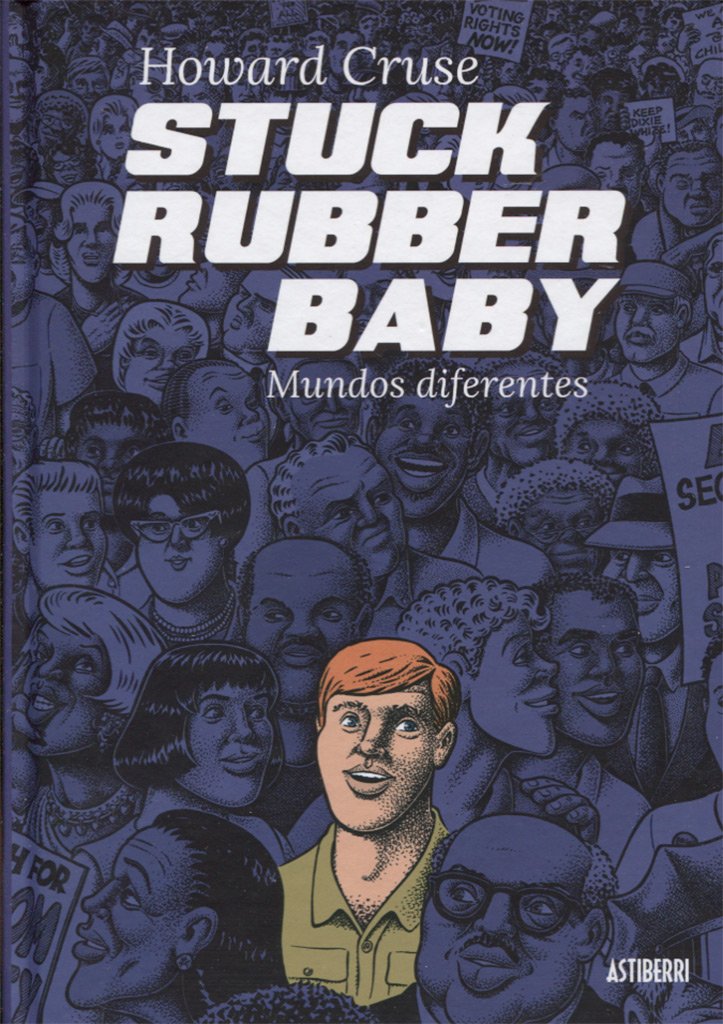
Howard Cruse 1944 - 2019


Very sad news. Howard Cruse has passed away at the age of 75. The cause was cancer.

He was part of the underground comics movement in the 1970s with his comic book Barefootz. He also was the founding editor of Gay Comix in 1980. Later in the decade, he created the gay-oriented comic strip Wendel. DC Comics published his graphic novel Stuck Rubber Baby, which was nominated for and won numerous awards.

I remember taking the LIRR out to Huntington with Howard to have lunch with the Berndt Toast Gang for its monthly lunch. A self-effacing talent who was very gracious. He was more interested in the other cartoonists than talking about himself. He was one of the first, if not THE first cartoonist to draw comics and alternative newspaper strips about homosexual life. He will be missed.

Monday, November 25, 2019

Gahan WIlson 1930 - 2019


A Gahan Wilson cartoon from Look Magazine  September 10, 1963.


Gahan Wilson, known for his macabre magazine cartoons in Playboy, National Lampoon and The New Yorker, died Thursday in Scottsdale, AZ at the age of 89. The cause was dementia.


His stepson, Paul Winters, posted:


"The world has lost a legend. One of the very best cartoonists to ever pick up a pen and paper has passed on. He went peacefully - surrounded by those who loved him."

He was born in Evanston, IL. He was "born dead." This is a true story he would tell, just as the 2013 documentary on his life is titled "Gahan Wilson: Born Dead, Still Weird." 

From the NY Times obituary:
"The 'born dead' part of the documentary’s title refers to the story he recounts of his birth: His mother had been given an anesthetic that knocked her out but also caused him to be born seemingly dead. The hospital staff was prepared to “put me in some sort of box,” he says in the film, but his family doctor intervened.

"'He used hot and cold water and slap, slap, slap,' Mr. Wilson told The Comics Journal in 2011. 'He got me coughing and puking and breathing and that’s that: I was alive.'"

I met Gahan Wilson on a Tuesday at The New Yorker offices, back when it was in Times Square. It was maybe 15 years ago on what's called "Look Day" or "Cartoon Look Day" to be more descriptive. He was a quiet fellow; soft spoken and polite. I got to know him over time, while we waited in what was then called the "Cartoonists' Lounge." It was just a large closet with a couch. Many times, after filing in and out of the editor's office to show our cartoon batches for that week, Gahan, Sam Gross, Warren Miller, David Sipress, and other cartoonists would walk a few blocks to have lunch and talk shop.

Gahan told me, one time, about the early days, when he was just starting out. This was over one of these lunches and I, by chance, was sitting next to him. During the first years that Gahan Wilson slogged up to the Midtown NYC markets for "Cartoon Look Day," he was told that his cartoons, while funny, were probably not fit for the midcentury sensibilities that the cartoon editors were looking for. What was frustrating for him was that the editors LIKED what he was doing. How could they like it and not buy it? Maddening!

One day, after a long tome of note selling to the major mags, he went up to the Collier's magazine, as usual. The regular cartoon editor, Gurney Williams, was not there. The art director was temporarily performing the cartoon editor chores. (Gurney Williams had just accepted the cartoon editor position with Look Magazine.) The art editor liked Gahan's single panel cartoons and bought some. That was, as they say in the business, his big break. Slogging persistently has its rewards.

Soon, he would become a mainstay cartoonist at Playboy with his macabre cartoons, usually in full color and a whole page. He was a favorite of Hugh Hefner's. ("By the early 1960s, I could say with real satisfaction that no other magazine in the world — The New Yorker included — had a cartoon stable the equal of Playboy’s. And no cartoonist was more popular, or more enduring, than Gahan Wilson." - Hefner, as quoted in "Gahan Wilson: Born Dead, Still Weird.")

In the 1970s, he became a regular at the National Lampoon with his comic strip "Nuts."

There are a lot of tributes and remembrances on the web. A few are:

CNN: Cartoonist Gahan Wilson, 'the Wizard of Weird,' dies at 89
The New Yorker: The Beautifully Macabre Cartoons of Gahan Wilson

Washington Post: Gahan Wilson, cartooning’s master of the creepy and the macabre, dies at 89

Courtesy of my friend Dick Buchanan, here are some of Gahan Wilson's little seen magazine gag cartoons from the first decade he was drawing:

1. At last a major market cartoonist, Gahan Wilson cartoons began appeared regularly in Collier’s until they ceased publication. COLLIER’S. October 15, 1954


2. COLLIER’S. January 7, 1955


3. COLLIER’S. January 21, 1955


4. The masses may have been bewildered but Cartoon Editors were beginning to get the message. TRUE MAGAZINE. May 1955


5. TRUE MAGAZINE. August 1955


6. SPORTS ILLUSTRATED. c. 1955


7. COLLIER’S. September 16, 1955


8. COLLIER’S. January 20, 1956


9. COLLIER’S. March 16, 1956


10. COLLIER’S. March 23, 1956.


11. COLLIER’S. July 6, 1956


12. When Collier’s folded, Cartoon editor Gurney Williams welcomed Wilson to the pages of Look. LOOK MAGAZINE. July 22, 1958


13. Many of Wilson’s best gag cartoons appeared in Look Magazine in the late 1950’s and early 1960’s. This one was a classic. LOOK MAGAZINE. December 3, 1963


14. Dell Editor and cartoonist John Norment was a friendly editor who happily promoted Wilson’s early work, publishing many cartoons, several spreads, and cover art for his two Dell publications. FOR LAUGHING OUT LOUD. October-December, 1963


15. 1000 JOKES MAGAZINE. June-August, 1964


16. FOR LAUGHING OUT LOUD. 31 1964


17. FOR LAUGHING OUT LOUD. July 1964


Related:


From the Dick Buchanan Files: Some Gahan Wilson Gag Cartoons 1955 - 1964

THE TRUTH ABOUT GOLF AND OTHER LIES by Buddy Hackett with Drawings by Gahan Wilson


Friday, November 22, 2019

PS Magazine 1951 - 2019


PS Magazine, "The Preventive Maintenance Monthly," will cease to be after this month.

The monthly army instructional magazine, which detailed how to maintain and problem solve issues relating to army-issued jeeps, guns, communication devices, etc., was originally created and edited by Will Eisner. He ran the magazine from its inception in 1951 until 1971.

Mike Rhode reports that "P.S. Magazine ended as printed comic in 2017, ends as digital comic book in 2019:"

While looking for information on military educational comic books, I went to a couple of websites for the P.S. Magazine, the Will Eisner-created longtime Army preventive maintenance publication.
"A World War II publication, Army Motors, which used a few cartoon characters to discuss maintenance problems, became the model for a new publication. In June 1951, the first issue of PS Magazine was published using the cartoon format. The Army technical bulletin transitioned to an all-digital format in June 2017, publishing its 775th edition -- the last to run in print."
The Defense Visual Information Distribution Service (DVIDS) says that the electronic issue version will end this month with #804:
" Effective 1 Nov 2019, PS will cease publication of its monthly, illustrated magazine and move to a fully-online information resource. To read PS Magazine after 1 Nov 2019, visit www.psmagazine.army.mil. A quarterly compilation of articles appearing on its website will be made available on DVIDS."
Currently issues from 1999-2019 can be downloaded at the magazine's site at https://www.logsa.army.mil/#/psmag

Historical issues from 1951-2018 can be downloaded here.

Friday, November 15, 2019

Tom Spurgeon AKA "The Comics Reporter" 1968 - 2019


Photo of Tom Spurgeon by Meghan Ralston.


Tom Spurgeon, who was one of the co-counders of the Cartoon Crossroads convention in Columbus, Ohio, as well as the man behind the comicsreporter.com web site, passed away on Wednesday. He was 50 years old. No cause of death has been given.

The Columbus Dispatch has more:

Spurgeon served as managing editor and executive editor of the noted industry trade magazine The Comics Journal from 1994 to 1999. He co-wrote the 2004 biography, “Stan Lee and the Rise and Fall of the American Comic Book,” with Jordan Raphael. At the time of his death, he was managing his own website, The Comics Reporter.

A public memorial will be held at 5 p.m. Dec. 14 at the Billy Ireland Cartoon Library and Museum, 1813 N. High Street in Columbus. There are no current plans for a funeral, his brother Whit said.

Spurgeon is survived by his mother, Sandra “Sunny” McFarren, and brothers, Dan and Whit Spurgeon.
When I heard that Tom had passed away, I couldn't believe it. It was just wrenching news. He was a force in comics. Everyone knew him or knew of him. Spurgeon was an enthusiastic comics omnivore and champion. This is a tremendous, unexpected loss. RIP, my friend.

Thursday, November 14, 2019

From the Dick Buchanan Files: Dog and Cat Cartoons 1949 - 1966

Dogs and cats. Living together. Mass hysteria!

Courtesy of gag cartoon collector extraordinaire Dick Buchanan, here are twenty magazine cartoons about cats and dogs from his vast Greenwich Village-based clip file. Thank you and take it away, Dick!

--

DOGS AND CATS
(1949 – 1966)

Dogs and cats play a big part of the lives of many Americans.  Some folks like cats while others like dogs.  Some like both.  For what it’s worth, the Cartoon Clip File’s office pet is our goldfish, Benchley.

We laugh at our pets.  We’re never quite sure whether or not they laugh at us.


This time it’s our turn to laugh at them.  Here are some cartoons about our animal friends, the dog and cat . . .

DOGS


1.  HANK KETCHAM.  Collier’s, circa 1951.


2.  RAY HELLE.  The Saturday Evening Post  June 11, 1949.


3.  JACK TYRELL.  1000 Jokes Magazine  September – November, 1956.


4.  PHIL INTERANDI.  This Week Magazine  December 4, 1960.


5.  DICK SHAW.  Collier’s  May 20, 1950.


6.  BOB KRAUS.  1000 Jokes Magazine  Summer, 1951.


7.  JOHN GALLAGHER.  The Saturday Evening Post  March 30, 1957.


8.  VIRGIL PARTCH.  Collier’s  March 19, 1949.


9.  EDWIN LEPPER.  The Saturday Evening Post  November 2, 1963.


10.  VAHAN SHIRVANIAN.  The Saturday Evening Post  July 27, 1957.  


 CATS

1.  TED KEY.  Collier’s  December 16, 1950.


2.  GEORGE WOLFE.  American Magazine  August, 1950.


3.  BO BROWN. American Magazine  September, 1950.


4.  THE BERENSTAINS, JAN AND  STAN.  American Magazine  July, 1953.


5.  LARRY REYNOLDS.  Look Magazine  January 17, 1957.


6.  JOHN NORMENT.  The Saturday Evening Post  July 20, 1957.


7.  MORT WALKER.  The Saturday Evening Post  July 30, 1949.


8.  TOM HENDERSON.  The Saturday Evening Post  September 27, 1958.


9.  HERB GREEN.  The Saturday Evening Post  May 4, 1957.


10.  BILL HOEST.  The Saturday Evening Post  May 21, 1966.