Monday, August 15, 2022

Jean-Jacques Sempé 1932 - 2022


Jean-Jacques Sempé, who is best known for his illustrations for the Little Nicolas series of books with writer René Goscinny, died peacefully on August 11, 2022, at the age of 89. 

 Photo: © AFP


From Lambiek Comiclopedia:

Jean-Jacques Sempé was a French cartoonist and illustrator, whose crowded cartoon panels gave gentle commentary on the absurdity and banality of everyday city life. Since the 1950s, his drawings – including sequential ones – have appeared in publications throughout France, including Sud-Ouest Dimanche, Ici Paris and Paris Match…Together with writer René Goscinny, Sempé created the charming adventures of ‘Le Petit Nicolas’ (‘Little Nicolas’, 1954-1965) – originally as a comic strip, then as an illustrated text feature – starring a Parisian school boy telling about his everyday life.

Besides magazine cartoons, Jean-Jacques Sempé also illustrated posters, advertisements, postcards and stickers, as well as books … Following the success of ‘Le Petit Nicolas’, publisher Denoël has also released over 25 book collections with Sempé cartoons, starting with ‘Rien N’est Simple’ (1962), ‘Tout Se Complique’ (1963) and ‘Sauve Qui Peut’ (1964).


The Daily Cartoonist has much more here.  

As for me, Sempé was a master and there was so much life in his inkline. He was so renowned that (so I have heard) you could have just mailed him a fan letter addressed to "Sempé, Paris, France" and it would reach the master cartoonist, no problem. 

Here are a few of his many, many cartoons.


Above: the back cover to CARTOONS THE FRENCH WAY with a wordless Sempé gag.

Here are some of his cartoons from the 1955 paperback CARTOONS THE FRENCH WAY .


Sempé was in his early 20s when he drew these cartoons.


Best known today for his New Yorker covers, his depictions of Paris life are seminal. The New York Times, in this 2006 article, has called his work quintessentially French:

"His precise, elegant drawings are often set in a Paris that even Parisians dream of: a city of mansard roofs, high windows and wrought-iron balconies, where all the cars still look like Deux-Chevaux or 1950s Citroëns. Dwarfed by their surroundings, his figures - smallish men, balding, a little portly, with big noses and tidy little mustaches, their double-chinned, nicely coiffed wives in polka-dot frocks - are French Everymen, dignified and put upon at the same time. They nevertheless speak to the international human plight: the Thurberian power struggle between men and women, the daily need to keep up appearances, the unending cycle of tiny victories and middle-size defeats."


The composition, the rain, the look on the peoples' faces: all so well done, so seemingly effortless.


I like the look on her face.


Yeah, nude models really do get bored. And cold.


In the above gatefold, you can see his attention to a real sense of place.

"I showed her! I didn't touch a dish for two months!"


Above: clicking to enlarge will show you how good the composition is on this. At first glance, the squiggly, curly-cue line was, I thought, part of the store window -- but within a second, I discovered the gag.


A typical gag: a city scene with complex, busy ink work with a clear layout of who to watch to understand the gag.


Phaidon Press published a number of Sempé's works. Phaidon maintains a blog, The Nicholas Club, named for the title character in a series of children's books by Goscinny and Sempé.


Again, the reason that so many cartoons are wordless is because you don't have to know French to "get" them. Selling cartoons is Europe is easier when no words are used. And that's pretty hard to do!


Above a lovely, dry gag line. At first, I didn't see him amongst the dancing natives!

More links:

Christopher Wheeler shares photos of Sempé memorabilia (which is where I took the above image).

Read Yourself Raw profile.

Mike Lynch Cartoons blog (Yes, you're soaking in it now!) has more on French cartoon books here.


Above from the hardcover collection of cartoons IN FRANCE NOTHING IS SIMPLE by Jean-Jacques Sempé. Copyright 1964 by Holt, Rinehart and Winston, Inc.

And now a series of drawings by Jean-Jacques Sempé for CHARLIE MENSUEL No. 104 September 1977.


Before CHARLIE HEBDO ("Charlie Weekly"), it was CHARLIE MENSUEL ("Charlie Monthly").

Here's the front and back covers, and an interior cartoon sequence by Jean-Jacques Sempé from issue number 104, September 1977.

This cartoon is a portrait of men and women through the decades. It works like a cartoon and reads like a lovely short story. You may want to open these scans onto a new page so you can really enjoy all of the wonderful drawing.


The back cover:


Francis Marmande in Le Monde:

“Sempé was a cartoonist. But more than just a cartoonist. He was able to analyze, to make people laugh, excite them, show them what they had never seen before and change the way they look at things. He captured the language of the age, recorded its images and offered as much food for thought as Georges Perec (Things), Pierre Bourdieu (Distinction) and Roland Barthes (Mythologies). With a bonus burst of laughter. He had a certain touch, a sense of 'reported conversation' above and beyond the best satires. He was the philosopher of cartoonists.”
 
Related:
 
ComicsBeat has a wonderful bio of him and many kind words from colleagues and fans (which is where I got the above quote).


Friday, August 12, 2022

From The Comics Journal: The First Japanese Manga Spider-Man: Supaidāman


From The Comics Journal:

We are pleased and excited to bring you something very special today: a 1995 essay by Ono Kōsei, one of the founders of American comic book fandom in Japan, reflecting upon his role in the making of the dark and startling 1970-71 Spider-Man manga series by Ikegami Ryōichi, a Garo contributor later famous for works like Crying Freeman and Sanctuary. This piece sheds a lot of light on one of the most striking chapters in manga and Marvel history. Translated by Jon Holt & Saki Hirozane. Don’t miss it!!

Thursday, August 11, 2022

Raymond Briggs 1934 - 2022


Raymond Briggs in his studio at home in Sussex. Photo from The Times by EYEVINE.


Award winning cartoonist and one of the early creators of the graphic novel genre, Raymond Briggs, passed away on August 10th. He was 88. The cause of death was pneumonia.

ABC News:

"Briggs' family said he died Tuesday, and thanked staff at Royal Sussex County Hospital, near his home in southern England, “for their kind and thoughtful care of Raymond in his final weeks.”

Creator of the dark nuclear war graphic novel When The Wind Blows, he was best known for The Snowman (1978) which was tuned into an animated special four years later and is now a British Christmas tradition.  

Always interested in the medium of comics to tell stories, he talked about encountering the disdain for the medium when applying to art school in this 2004 Guardian interview:

"'I never thought about being a gold-framed gallery artist and was only pushed into painting when I went to art school. I went there wanting to do cartoons.' Briggs remembers the interviewer at Wimbledon College of Art nearly exploding when he expressed this ambition. 'He went purple in the face and said, ‘Good God, is that all you want!’ It really was the lowest of the low and so I started to paint because when you’re only 15 and the big man with a beard tells you what to do, you generally do it.'"

ComicsBeat:

"Among his many, many achievements, he was one of the first people in the UK to foresee the maturity of the comic book form and inaugurate the graphic novel – alongside the efforts of Posy Simmonds‘ newspaper-serialised comic novel work, and Bryan Talbot’s efforts of a mature comic novel with Luthor Arkwright in the UK independent press and underground comic scenes.

"Explorations of more mature material – whilst retaining the open charm of his earlier work – began with Gentleman Jim (1980), about the life of a toilet cleaner with a wild imagination and then developed further with his standout cold-war graphic novel When the Wind Blows (1982) about a retired couple trying to survive the aftermath of a nuclear attack. Both of these books could be regarded as among the first of what has since become a wave of graphic novels to be published in the UK.

"When the Wind Blows proved to be both controversial and influential. In 1986 it was adapted into a chilling animated film, directed by Jimmy Murakami and starring Peggy Ashcroft and John Mills, and was met with wide critical acclaim."

 The Hollywood Reporter:

"He is survived by his step-children and step-grandchildren, who said in a statement that he 'will be deeply missed.'

"'We know that Raymond’s books were loved by and touched millions of people around the world, who will be sad to hear this news,' they added. 'Drawings from fans — especially children’s drawings — inspired by his books were treasured by Raymond, and pinned up on the wall of his studio.'"


Wednesday, August 10, 2022

Sid Jacobson 1929 - 2022


Veteran comics editor and writer Sid Jacobson passed away. He was 92.


The New York Times:

Sid Jacobson, a veteran comic book writer and editor whose work took him from the opulent, fanciful world of Richie Rich to the real-life terrorist attacks of 9/11, died on July 23 in San Francisco. He was 92.

His death, in hospice, was caused by a stroke following a case of the coronavirus, his family said in a statement.

From 1952 to 1982, when the company went out of business, Mr. Jacobson was a writer and editor at Harvey Comics in New York, which published the adventures of Casper the Friendly Ghost, Richie Rich and Wendy the Good Little Witch, as well as crime, horror and romance comics.


At Harvey he met the artist Ernie Colón, who became a frequent collaborator. “Wherever I worked as an editor, I always hired him,” Mr. Jacobson said in an interview after Mr. Colón’s death in 2019. “We were very close. We were like brothers.”

The two teamed up to tell a graphic-novel version of the 9/11 Commission’s report, which examined the terrorist attacks on the World Trade Center and the Pentagon. The report, the result of a government study headed by Thomas H. Kean, the former governor of New Jersey, became a best seller, if a dense one, in 2004. So did “9/11 Report: A Graphic Adaptation,” published in 2006. Mr. Jacobson called the effort “graphic journalism.”


The Daily Cartoonist:

As a Harvey Comics editor from 1952 to 1982 Sid was part of the gradual transition from the adventure, horror, and comic strip books that was the company’s focus in the 1940s and 1950s to the Richie Rich, Casper the Friendly Ghost, and Sad Sack output that defined the company in the 1960s and 1970s.

In the 1980s Sid became the executive editor of Marvel’s faux-Harvey brand Star Comics after Marvel Comics’ effort to buy Harvey properties fell through and Harvey shut down operations the first time. Sid hired many Harvey creators (Warren Kremer, Len Herman, Howie Post, +) for the Star comics.


A prolific freelancer, he was also a lyricist. His son wrote:

In the late 50's he began writing lyrics to songs. Seth once asked him how he started and he said, "I thought I could do it." And that was him. Not afraid to try and fail. He would see how it went. Well, he has about 100 published torch and love songs (circa late '50s and '60s ("The End", "Warm", "Don't Pity Me") and novelty songs ("Yogi", "The Yen Yet Song" and my personal favorite, "Dr. Poop"). He wrote comedy records performed by folks such as Sandy Baron (both for Sick Magazine -- "Why not Mad?" I once asked. "Mad didn't pay enough!" he told me). He wrote the lyrics to a collection of folk songs about New York City, "The Citizens Sing About a City of People". In the 50's he invested in Loraine Hansbury's original production of "Raisin in the Sun" ("she was a gem who died way too young," he once said). He even invented a board game "Chairman of the Board", but we have not yet located a copy. 


Related:

The Comics Journal

Tuesday, August 09, 2022

Author David McCullough 1933 - 2022


Not my photo. A 2012 Associated Press photo of author David McCullough from the Academy of Achievement. 


David McCullough died yesterday at the age of 89.

Very sad news. Like so many, I read a number of his books.

I met him briefly on the Brooklyn Bridge. It was the late 1990s or so. He was with a small group of people and he caught my eye. Is that David McCullough? I was wondering. He must have seen me looking at him. He walked up to me and, smiling, asked if I would take a photo with the group. He handed me a camera and I took a picture of him and his entourage. He thanked me as I handed the camera back and I said something like, “Oh, sure” and smiled back. I regret I didn’t whack up the nerve to tell him I was a fan.

Monday, August 08, 2022

Special Effects by the Lydecker Brothers


There is an interest and maybe a bit of a longing for practical movie effects. Since most effects in movies and TV today are the result of moving pixels around, it's fascinating to watch older productions and see miniatures and matte paintings and other "practical" or in-camera effects. These effects utilize one-of-a-kind models and special lighting. Here's a reel of some of the many effects that the Lydecker brothers (Howard and Theodore Lydecker, always known—and billed—as such, were Howard "Babe" Lydecker (June 8, 1911 – September 26, 1969) and Theodore Lydecker (November 7, 1908 – May 25, 1990).) Their father, Howard C. Lydecker, pioneered special effects, working for Douglas Fairbanks. The brothers began working in the 1930s -- first on the Republic serials and then for other clients and TV shows. 


From Chris Enss:

Howard and Theodore worked together on conceptualizing the small scale sets. Theodore would then draft the plans for the building and oversee the construction. Howard’s job was to film the miniature models of towns, spaceships, buildings, trains, automobiles, stagecoaches, and whatever else a script might call for. In a short time, the Lydeckers earned the reputation as the kings of special effects. The approach they took when preparing for a sequence was simple: build large, photograph the subject matter from every possible angle, and always use natural light.

In addition to using detailed models and filming sequences with the miniatures against real location backdrops, Howard Lydecker shot the scenes in slow motion. He realized that during such shoots, film ran through the camera at a higher speed than normal (determined by the scale of the models) and when projected at normal speed, the slow-motion effect gave the end product the right appearance of mass and size. Utilizing all the techniques the Lydecker brothers developed and subsequently perfected, the visual effects on the movies Republic Pictures produced were superior to that of any other studio.


More at The Pulp Reader.
 

Friday, August 05, 2022

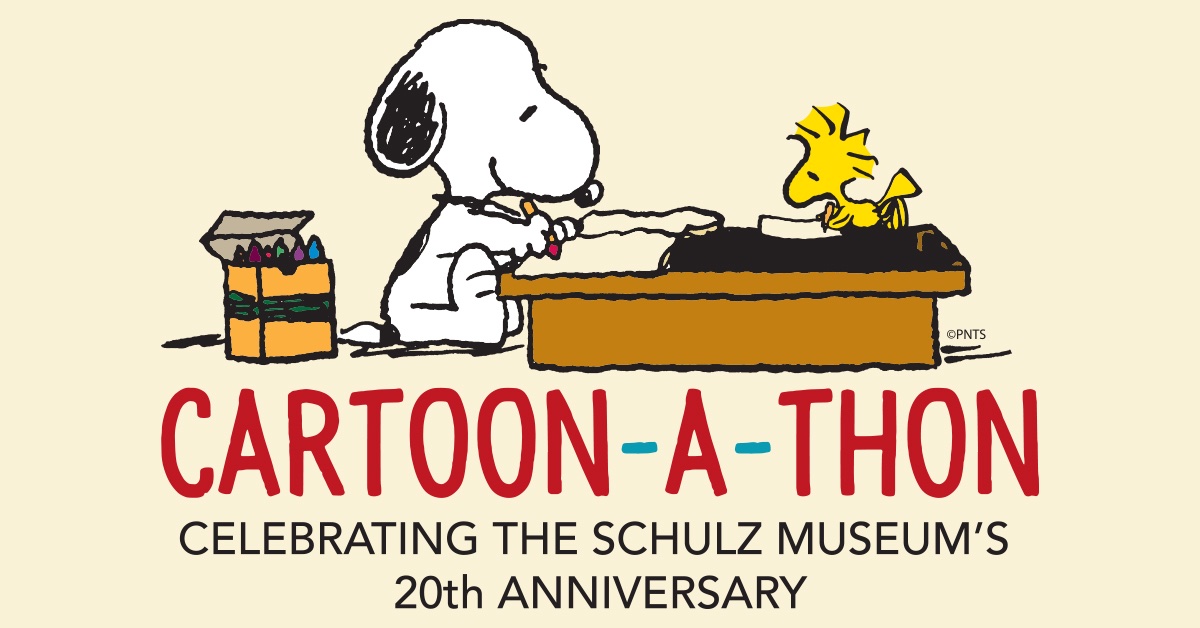
Saturday, August 6, 2022: Charles M. Schulz Museum "Cartoon-A-Thon"


From the Schulz Museum in Santa Rosa, CA:

CARTOON-A-THON: CHARLES SCHULZ MUSEUM CELEBRATES 20TH ANNIVERSARY
In the 'Peanuts' creator's centenary year, the Charles M. Schulz Museum in Santa Rosa celebrates its '20th Anniversary with some of today’s top cartoonists! Come meet your favorite cartoonists while exploring all things cartooning with drawing games, live presentations, book signings, and more.' Guests include Raina Telgemeier, Reza Farazmand, Nathan Pyle and Brian Fies. Here's the day's schedule for tomorrow, Saturday, 10am-5pm, and guest-list: https://schulzmuseum.org/cartoon-a-thon/

Thursday, August 04, 2022

Video Preview: “The Art of the Real Tom Sawyer” by Leif Peng


Today's Inspiration Press publishes its new hardcover "The Art of the Real Tom Sawyer" this week. The book is a showcase for this midcentury illustrator and is written by Sawyer and Leif Peng, with Ana-Marina Vlahovic. More at DownTheTubes.

Leif has an amazing preview here:


Wednesday, August 03, 2022

Paul Coker, Jr. 1929 - 2022


Mad Magazine contributor, Rankin-Bass animation studio designer and advertising illustrator Paul Coker, Jr. passed away on July 23, 2022. He died in his home after a brief illness.

Via MSN:

Coker was born and raised in Kansas in 1929. He went to and graduated from the University of Kansas with a degree in drawing and painting, and then got a job as a greeting cards designer for Hallmark. In 1961, he began illustrating for the magazine Mad, and he went on to illustrate over 375 articles while there. He also did freelance work for other publications, including Esquire, Look, Good Housekeeping, and Playboy. Coker's work with Rankin/Bass began with an uncredited involvement in The Wacky World of Mother Goose in 1967. He then contributed as either a character designer or production designer to films like Frosty the Snowman, Jack Frost, Rudolph's Shiny New Year, and The Easter Bunny Is Comin' to Town, eventually ending with Santa, Baby! in 2001. His final onscreen work was done for the pilot of the 2002 series Whatever Happened to... Robot Jones?.


Via DailyCartoonist:

Coker started off as an designer of greeting cards for Hallmark in the 1950s and 1960s, often in collaboration with writer Phil Hahn. He worked for Esquire, Good Housekeeping, Pageant, Look, McCall’s and became an editorial cartoonist for the New York Enquirer in 1957. Coker also contributed to Hugh Hefner’s Playboy, where he created both erotic cartoons as well as parodies of other comics.


 More about Coker's greeting card career here. 


He joined Mad Magazine's "Usual Gang of Idiots" in 1961 and was best known for the "Horrifying Cliches" series, written by collaborator Phil Hahn. This is where I saw his instantly distinctive clean yet jerky coffee-nerves pen line.

Paul Coker, Jr.'s art for a 1967 Travelodge magazine ad.
 

Related:

Paul Coker Draws 89 YEARS IN A SAND TRAP by Fred Beck
Part 2: Paul Coker Draws 89 YEARS IN A SAND TRAP by Fred Beck


Tuesday, August 02, 2022

Batman and Judge Dredd Comic Book Writer Alan Grant 1949 - 2022


British comic book writer Alan Grant has died at the age of 73. No cause of death named, but he had been ill for some time. 

From The Evening Standard:

Alan Grant was born in Bristol in 1949 and grew up in Scotland. As a comic book writer, he worked on some of the biggest titles, like Batman and Judge Dredd.

But he was also known for nurturing new talent and is credited with discovering writer Alan Moore when he found his script in an unsolicited submissions pile at 2000 AD.

His writing was influenced by his early experiences. At school, his teachers would beat him for being left-handed, and he was regularly expelled, but as a statement from 2000 AD said, “the injustice of his treatment [gave] him a powerful distaste for authority which saturated his writing.”

He had a “mischievous and wicked sense of humour that was at times scatological and at others soulful,” says 2000 AD’s obituary.

He began working as a trainee journalist at the age of 18, at a Dundee-based publisher and home to the Beano. Grant then moved to London in 1970 to work as a writer and sub-editor, but after writing a strip for the short-lived comic book Starlord, he was offered an editorial position at 2000 AD.

In 1980, he left his job and was left unemployed when another job fell through. But comic book writer John Wagner asked Grant to help him with his work, and the pair became a powerhouse, under the pseudonym T.B. Grover.

2000 AD’s obituary says that “their partnership redefined Judge Dredd, their black humour and wild imaginations forging what many consider to be the strip’s first great ‘golden age.’”

Grant’s writing always maintained a political edge and was always a “fierce and strongly independent thinker.”

He later worked on DC Comics’ Detective Comics and Batman and continued to work for 2000 AD through the 1990s.

Grant continued to write into his last years, despite being ill, and worked on a Judge Anderson story in 2018 and a war story in the Battle Special in 2020.

He and his wife Sue organised a comics festival in their village of Moniaive in Dumfriesshire for years.

Alan Grant died on July 20, 2022.

Nichelle Nichols, Lt. Uhura on 'Star Trek,' Has Died at 89

Nichelle Nichols, best known as Lt. Uhura on the original Star Trek, passed away over the weekend. She was 89.


Her son wrote:

"Last night, my mother, Nichelle Nichols, succumbed to natural causes and passed away. Her light, however, like the ancient galaxies now being seen for the first time, will remain for us and future generations to enjoy, learn from, and draw inspiration."


There are tributes and remembrances all over. I will post this short clip from STAR TREK III: The Search For Spock (1984) which showcases her memorably. 


Monday, August 01, 2022

The Garden As of August 1, 2022


A few pics of the garden today. It's been a dry summer, that started out cool and is now getting hotter. The zinnias love it, the runner beans are coming along slowly. Not enough blooms for me.

The tomatoes are crazy. They are overflowing their cages. This one I intentionally bent down to help cradle a stray stem.

The peppers, in the foreground, were completely denuded by a hungry deer.

But, as you see, they have come back.

Squash vine borers have decimated the squash here. 


OK, time for pretty flower pictures:


And this will be dinner ....