Friday, April 22, 2022

Cartoonist Chris Schweizer: The Drawing Tools I Use


Eisner Award nominated cartoonist Chris Schweizer posted this pic of his drawing gear on his Facebook page and, with his permission, here it is for your perusal. Chris says:

"Sometimes folks ask me what tools I use (usually in regards to the painted drawings and commissions I post from time to time). Since I was refilling my palette today, I figured I'd go ahead and snap some pics while my paints were all out. Hope this is helpful!"

Chris writes more at his Patreon.

Thursday, April 21, 2022

Virtual Event Friday, April 22, 2022: Paddy Whacked: Tenniel, Nast, and 19th Century Irish Caricature Presented by Michael Dooley


The Lewis Carroll Society presents a live virtual event on April 22 at 1pmPST (4pmEST): Paddy Whacked: Tenniel, Nast, and 19th Century Irish Caricature presented by Michael Dooley.


The is part of the all-day Lewis Carroll Society of North America Spring 2022 Event "Curious Ways In: Collecting, Performing, and Contacts with the Carrollian Universe."

It's in conjunction with the USC Libraries Wonderland Award.

Virtual Event: Call Me Nathan: An Evening with Quentin Zuttion April 28, 2022 6pmEST:


Via the Billy Ireland Cartoon Library & Museum, a virtual conversation Thursday, April 28th with graphic novelist Quentin Zuittion:

Join the Billy Ireland Cartoon Library & Museum on Thursday April 28 at 6pm ET for a special event with French author and cartoonist Quentin Zuttion, co-creator of the graphic novel "Call Me Nathan."

Assigned female at birth, Nathan spends his formative years facing questions without answers. As puberty hits and begins to change his body, it all just feels wrong, and something needs to change for it to feel right. He finds himself at a crucial crossroads. Becoming oneself is the work of a lifetime, no matter our gender, sexuality, or refusal to be limited by such categorizations.

For Nathan, his courageous first steps towards discovering his true self happen through transition. Based on a true story, Catherine Castro and Quentin Zuttion explore the tenacity and bravery that such a journey entails while society continues to wrestle with the meaning of identity. "Call Me Nathan" issues a moving call for understanding, a powerful denunciation of prejudice, and a celebration of everything it means to love.

Zuttion will be in conversation with Dr. Margaret Flinn, Associate Professor in The Ohio State University Department of French and Italian. Book signing to follow.

Unable to attend in person? Register to join the Zoom broadcast.

Wednesday, April 20, 2022

Art by Charles Geer: THAT SUMMER WITH LEXY!


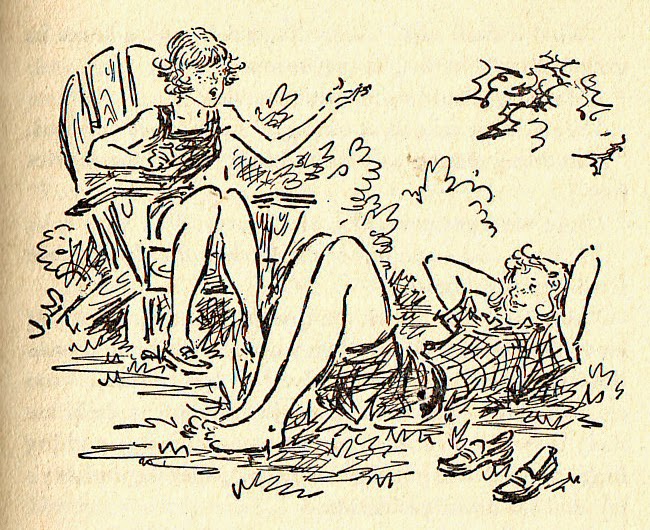
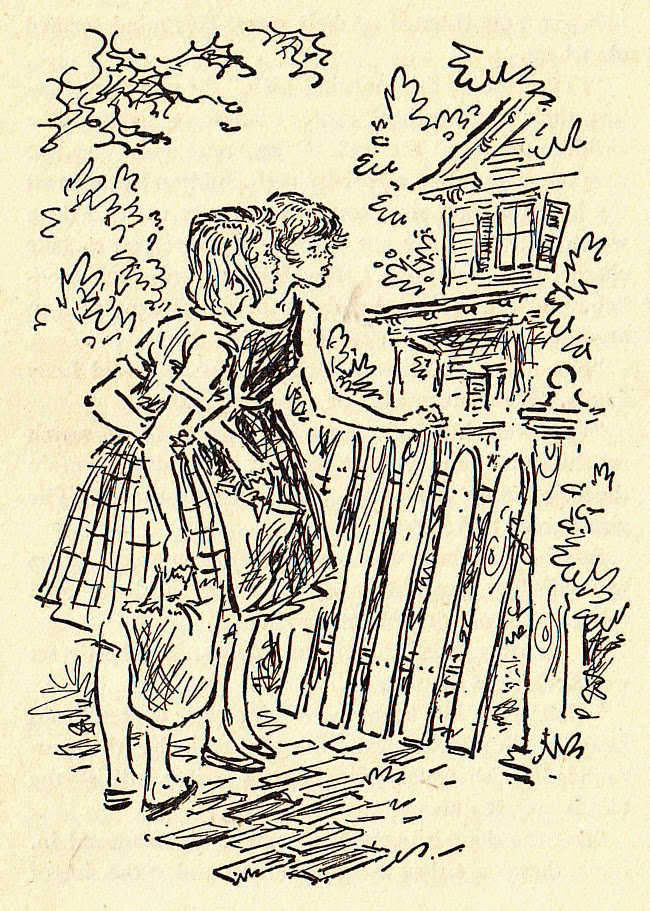
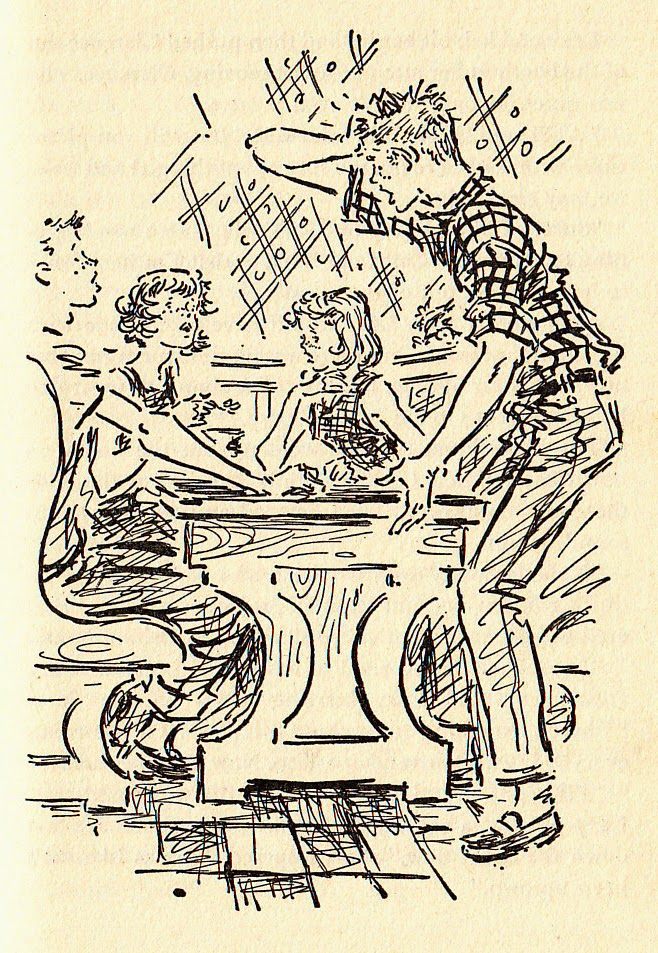
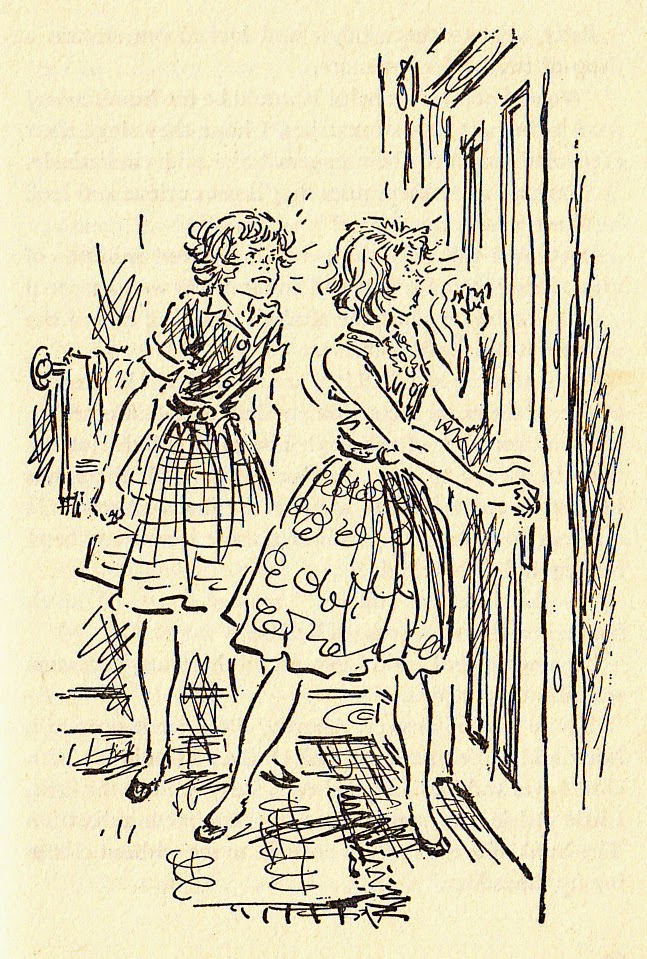
Here is another book with illustrations by Charles Geer (1922-2008). (Last month I showed you some of his work from the children's book THE MYSTERY AT REDTOP HILL.)

THAT SUMMER WITH LEXY by Audrey McKim was published in 1964 by Abingdon Press. It's copyright that year by the author. The dust jacket and cloth book cover utilize an exclamation point at the end of the title, but the interior title page drops it. 

Plot: Lexy O'Connor and her friend Patty are starting an unexciting summer vacation at home in Edmonton, Alberta, when they

"… decide to earn money for allowances during the school year. A White Elephant Sale ends in near disaster when a neighbor's wedding ring is sold; their house-to-house photography business almost collapses when two picture become police evidence. A lot happens, but it's all told in uninspired prose. The laugh possibilities in this string of misfortunes may hold the youngest members of the age group." -- Kirkus

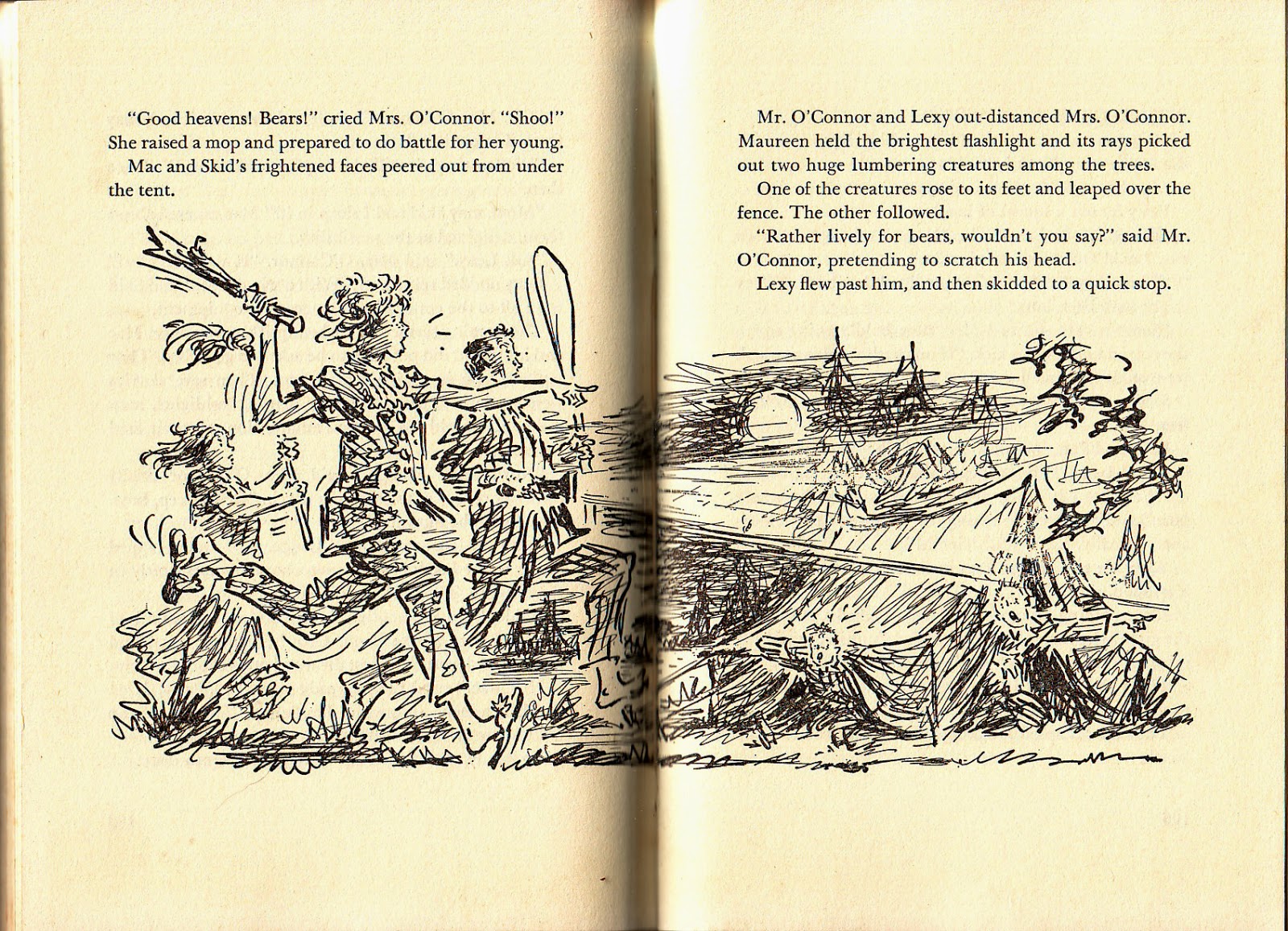
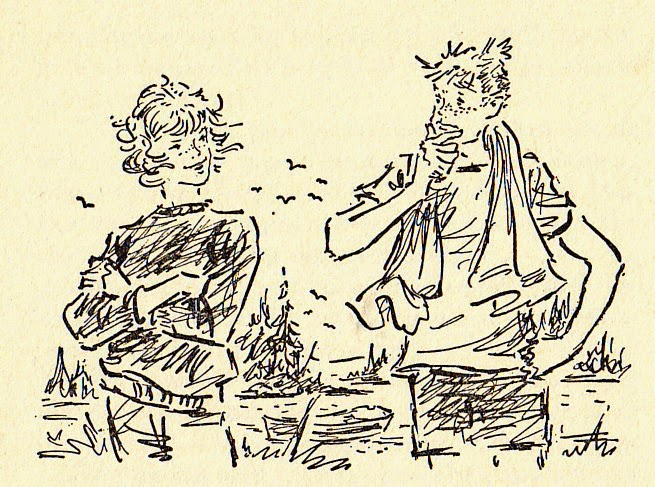
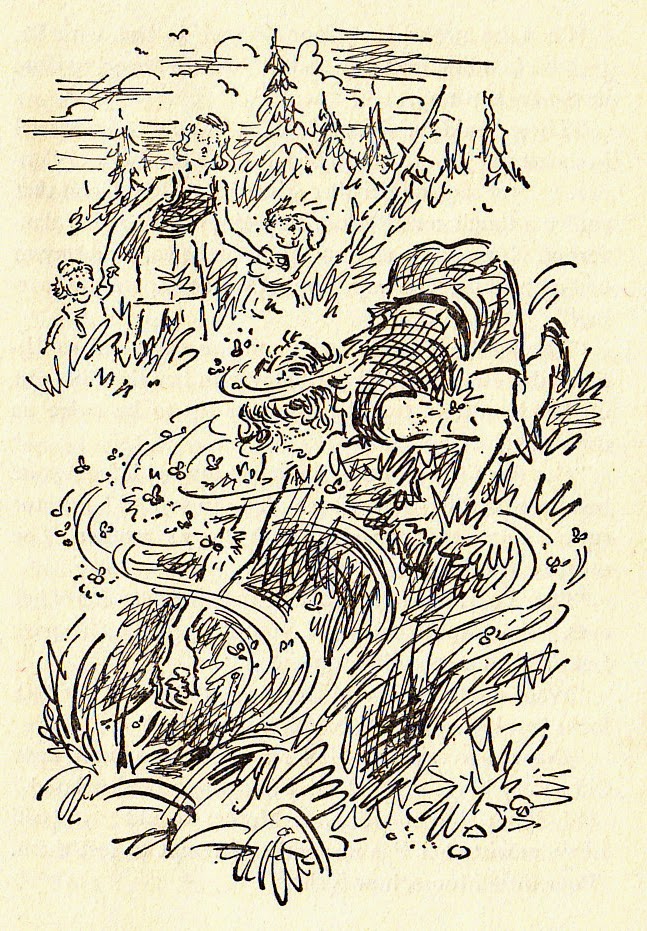
Here are some of the drawings from the book, all drawn in that loose but confident style of Mr. Geer's which I admire. Mr. Geer was born in Long Island, served in the navy in World War II, and then studied at Pratt. He settled in Rockland, Maine. You can see his love of trees, rocks and water in these drawings.


-- This has been an edited version of an April 20, 2015 blog entry.

Tuesday, April 19, 2022

Monday, April 18, 2022

Video: Mickey Rooney as "Mickey 'Himself' McGuire" in MICKEY'S CIRCUS (1927)


A salute to the late Mickey Rooney, who audaciously tried taking a comic strip character's name for his own, but did not get away with it.

Below is an excerpt from one of the TOONERVILLE FOLKS comedy movie shorts, based on the newspaper comic panel by Fontaine Fox (above). It stars a wee Mickey Rooney. He's the tough ne'er do well tyke "Mickey 'Himself' McGuire" in MICKEY'S CIRCUS (1927). This was his film debut.
 

Sure, it's similar to the Our Gang shorts, and you don't need me to tell you who Mickey is. He's the bossy one in the big black hat (see above drawing), the one moving the plot along.

There were 55 live-action two-reelers made, straddling the silent and sound eras, from 1926 to 1936.

Mickey's real name was Joe Yule, Jr. In the early silent shorts, he was billed as Mickey McBan and then Mickey Yule before settling on the same name as the bully from the feature, Mickey "Himself" Mcguire. And that was okay for a decade, while filming these movies.

By the 1930s, at the same time he was shooting the TOONERVILLE series, he was in another series based on a cartoonist's creation. He was the voice of OSWALD, THE LUCKY RABBIT for Disney,

With subsequent movie roles in bigger pictures, like A MIDSUMMER NIGHT'S DREAM and MANHATTAN MELODRAMA, it was time to move on. Besides, he was getting a little big to play McGuire.

So, in 1936, he left these shorts to do other roles. The first Andy Hardy movie, YOU'RE ONLY YOUNG ONCE, was a year away, and after that, in 1938, his scene-stealing role as Whitey Marsh with Spencer Tracy in BOY'S TOWN.

But the syndicate threatened him with a legal suit. The name of "Mickey 'Himself' McGuire" was one of the characters in the Toonerville Folks comic strip before he had it, of course, and he could not formally appropriate it. And so he changed his name for good this time, from Mickey McGuire to Mickey Rooney.

On an odd note, the popular panel was known by a couple of names too. In some papers it was Toonerville Folks, and in others Toonerville Trolley. The panel (it was always a panel, not a strip.) ran in up to 300 newspapers from 1913 through to 1955.

The Mickey Rooney live-action shorts were the "middle" movie series. The live-action series was bracketed by animated films. The first time that the Toonerville panel was brought to life in the movies was in a series of silent animated shorts from the Betzwood Motion Picture Studio between 1920 and 1921. The final time that the series was in the movies was Van Beuren Studio's production of "Toonerville Trolley" in 1936.

Here's Mickey Rooney hamming it up in MICKEY'S CIRCUS:


One of the featured players in these live-action pictures was Billy Barty, who played Mickey's brother Billy McGuire. He was three years old when he appeared in his first one. He's about six or seven years old in this excerpt from MICKEY'S THRILL HUNTERS (1931), which takes off on the Harold Lloyd "thrill" comedies:


Related: 

Child Star Delia Bogard Interview (1989) Via Barry Conrad. 

Delia Bogard starred, along with Rooney and Barty, in the Mickey McGuire series:

Friday, April 15, 2022

Society of Illustrators Gallery Show: WHAT ME, PANIC? Celebrating Angelo Torres Reception June 17, 2022


From left: Tony Tallarico, Angelo Torres and Howard Beck.


For Angelo Torres' 90th birthday, there will be a gallery show at the Society of Illustrators. The reception for his show, titled WHAT ME, PANIC? Celebrating Angelo Torres is June 17th. You can reserve here. He's posted an excerpt from a documentary video on his Instagram. 


Left to right: Lenny Brenner, Bill Gaines, Antonio Prohias, Angelo Torres, and Nick Meglin.

Thursday, April 14, 2022

Video: Milton Glaser on the Fear of Failure


Graphic design icon Milton Glaser talks about the balance between professionalism and personal artistic fulfillment in this 7 minute video about the fear of failure.


Wednesday, April 13, 2022

Video: Eike Exner on Comics and the Origins of Modern Manga


Eike Exner has just written Comics and the Origins of Modern Manga, published by Rutgers University Press in 2021. In this video he dispels popular myths about the history of Japanese manga and the influence of early American comic strips.


Tuesday, April 12, 2022

National Film Board of Canada: "Star Wars Kid: The Rise of the Digital Shadows"

In this Mathieu Fournier documentary on the first viral phenomenon of the digital age, Ghyslain Raza (the “Star Wars Kid”) breaks his silence and reflects on his story for the first time. In doing so, he also explores our collective experience living in an online world in which we have to make peace with our digital shadows. 


Monday, April 11, 2022

From the Dick Buchanan Files: More Vintage Gag Cartoons 1945- 1964

Dick Buchanan, the keeper of the legendary Cartoon Clip File (located somewhere in NYC's Greenwich Village), takes us behind the scenes, deep into his single panel cartoon stacks. Thanks and take it away, Dick!

---

MORE VINTAGE GAG CARTOONS
(1945 – 1964)

The cartoon clip file consists of an array of folders envelopes, and cartoon clips scattered all over the place. This enables us to arrange the files in no particular order. We just stumbled upon them. They are not arranged in alphabetical order as we simply don’t trust it -- there are several letters we suspect don’t belong. So here, is a clear example of one such folder—some vintage gag cartoons, arranged in no particular order, plucked from an unmarked cardboard box . . . Take a look!

1. KATE OSANN. Collier’s June 10, 1950.


2. VIRGIL PARTCH. True Magazine April, 1960.


3. HANK KETCHAM. Collier’s March 29, 1949.


4. ROY WILSON. American August, 1955.


5. BO BROWN. This Week Magazine March 25, 1945.


6. CHON DAY. The Saturday Evening Post September 27, 1958.


7. PAUL PETER PORGES. For Laughing Out Loud April – June, 1964.


8. GARDNER REA. Collier’s April 13, 1940.


9. PETER ASTIN. American Magazine August, 1955.


10. JANE SPEAR KING. Collier’s April 18, 1953.


11. JANE SPERRY. The Saturday Evening Post February 9, 1952.


12. BILL POLVOGT. The Saturday Evening Post April, 18, 1959.


13. LAFE LOCKE. Collier’s February 16, 1952.


14. SYLVIA GETSLER. Argosy January 1957.


15. DANA FRADON. Collier’s August 5, 1955.


16. MISCHA RICHTER. Collier’s July 26, 1947.


17. BILL HARRISON. American Legion Magazine May, 1954.


18. MAR HOONING. American Magazine November, 1950.


19. HERBRAM. Herbert J. Brammeier later signed his work Bram. American Magazine November, 1950.


20. JOSEPH SORRANO. American Magazine December, 1955.


Friday, April 08, 2022

Best Cartoons of the Year 1964

 Here are some cartoons from the book BEST CARTOONS OF 1964, "being a selection, by the artists themselves, of the best cartoons they drew for the leading magazines in the country for the past year." It's copyright 1964 by the series' long time editor Lawrence Lariar. The nice paper cover has long since been landfill, so here's the frontispiece.


Bob Weber's cartoons are always fun. Full of lowlifes, full of action -- and there's always an old timey cartoon touch to admire. In this case, I'm admiring the little puffs of smoke behind the hubby. This guy gets snaps for escaping the police and running through town without losing his stogie!


Here's a nice pen scratchy Joe Farris cartoon. It's only by letting my eye wander for a moment, keying in on what the shrink is looking at, that I was able to see those patient's fingers.


George Dole is one of the greats. I like his wide-eyed characters and easy, quick sketch style.


I like how the kid's hand is at his hip. So theatrical. Bo Brown has made a good point.


Jack Tippit with a prescient cartoon. Lariar wrote in his introduction that, "The past year may well go down in history as The Year of the Unleashed Libido." This cartoon certainly qualifies.


Arthur Henrickson with an early raw food market cartoon.


The one and only Don Orehek with a dopey cop. Note how his black spotting gets your eye bouncing between the 4 "Budapest String Quartet members" and the foreground.


Vahan Shirvanian gives us a 2 panel take on an old idea. I laughed at it. Maybe you saw it coming, but I didn't!


Do kids even know what a divining rod is? Here's another multi-panel by Jack Tippit. You can never have enough Tippit.


Michaud made me laugh out loud. Another "Year of the Libido" cartoon, for those who are counting! Look at the lovely little details of the room, and that easy, sweeping wash.


Jim Whiting reporting on the wild, drunken parties. Nowadays, a quick phone call from one of the kids' cell phones to Child Protective Services would bring about a swift end to this behavior!


This is maybe a dated and silly gag, but look at the composition: a sea of frowns as we look from left to right -- and then we see the exception, and read the gag line. All done in an economic 2-3 seconds.

-- This was an edited version of a May 30, 2008 blog entry.